Smart Product Configuration
The platform for configuring products with many variants – with intuitive, rule-based modelling of complex product logic.
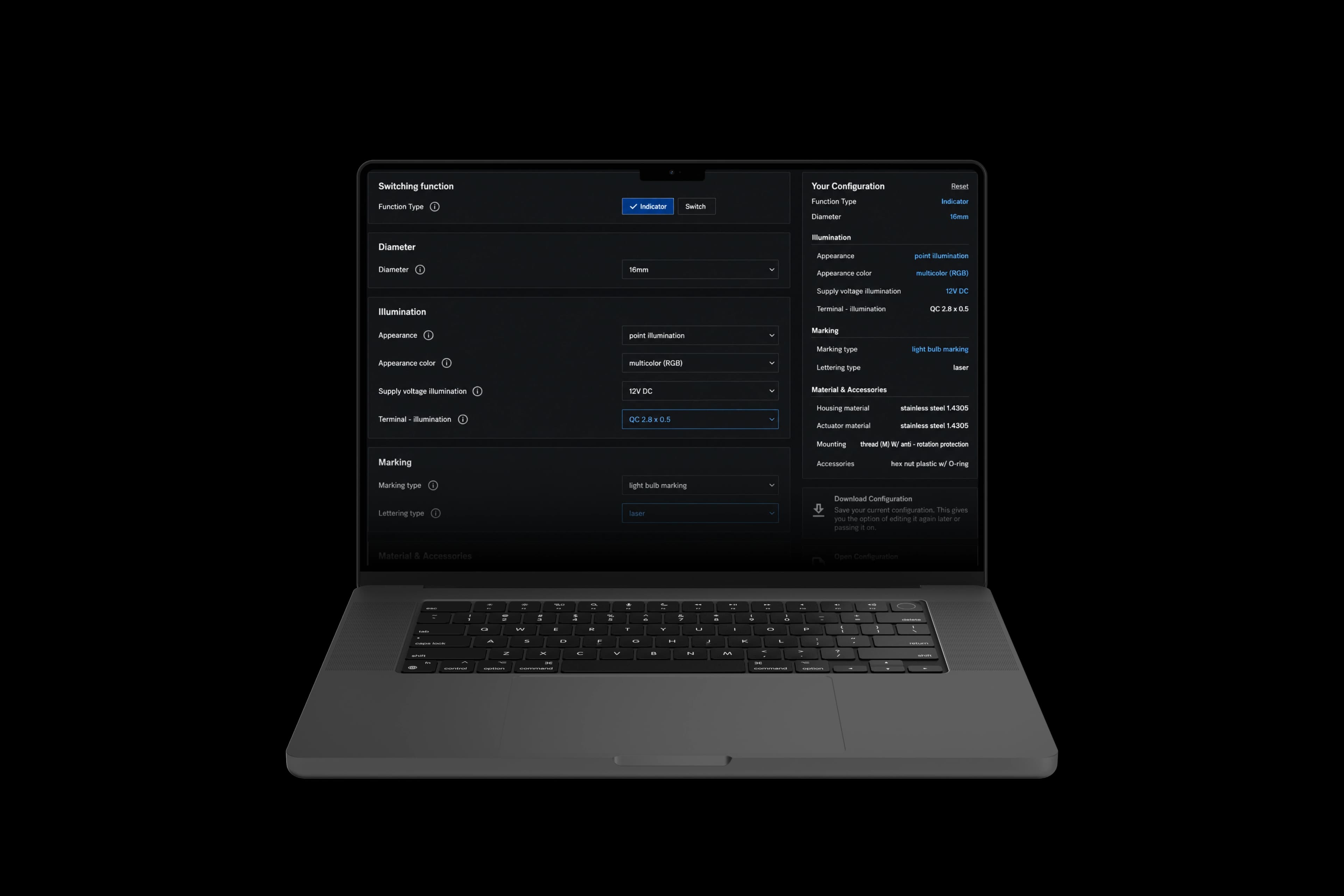


Maximum flexibility. Full control.A configuration experience that impresses.
Flexible order
Users start wherever makes sense to them. No fixed path, no dead ends: SPC keeps the configuration consistent in whatever order they choose.
Learn moreScreen recording: features are selected in any order and the configuration stays consistent.
Intuitive guidance
SPC guides users through every product dependency and shows clearly what is required and what does not fit together.
Learn moreScreen recording: the configurator marks invalid combinations and required features.
Explanations and alternatives
When an option is unavailable, SPC explains why in plain words and suggests alternatives or how to unlock it. Even complex dependencies stay easy to follow.
Learn moreScreen recording: the configurator explains a blocked option and suggests alternatives.
Automatic decisions
When the rules leave only one option, SPC selects it automatically. Fewer clicks, and users reach a valid configuration sooner.
Learn moreScreen recording: the configurator selects options the rules leave no choice about.
Analytics & insights
Live dashboards show how people use your configurator, how many finish and where they get stuck. Decide on data, not guesswork.
Experts at your side
We work with you hands-on to build your configuration solution around your requirements and processes. Step by step, all the way to go-live.
Cloud-native
We run SPC for you in an EU data centre, fully GDPR-compliant. No infrastructure to manage.
Transparent pricing
A fixed base fee plus usage-based costs. Predictable base. Flexible usage.
Seamless integration
Connect the engine to your ERP, PIM and CPQ systems through the open REST API. SPC fits your systems – not the other way round.
Support
Our team answers every question about your configuration solution, quickly and personally. So you can keep moving.


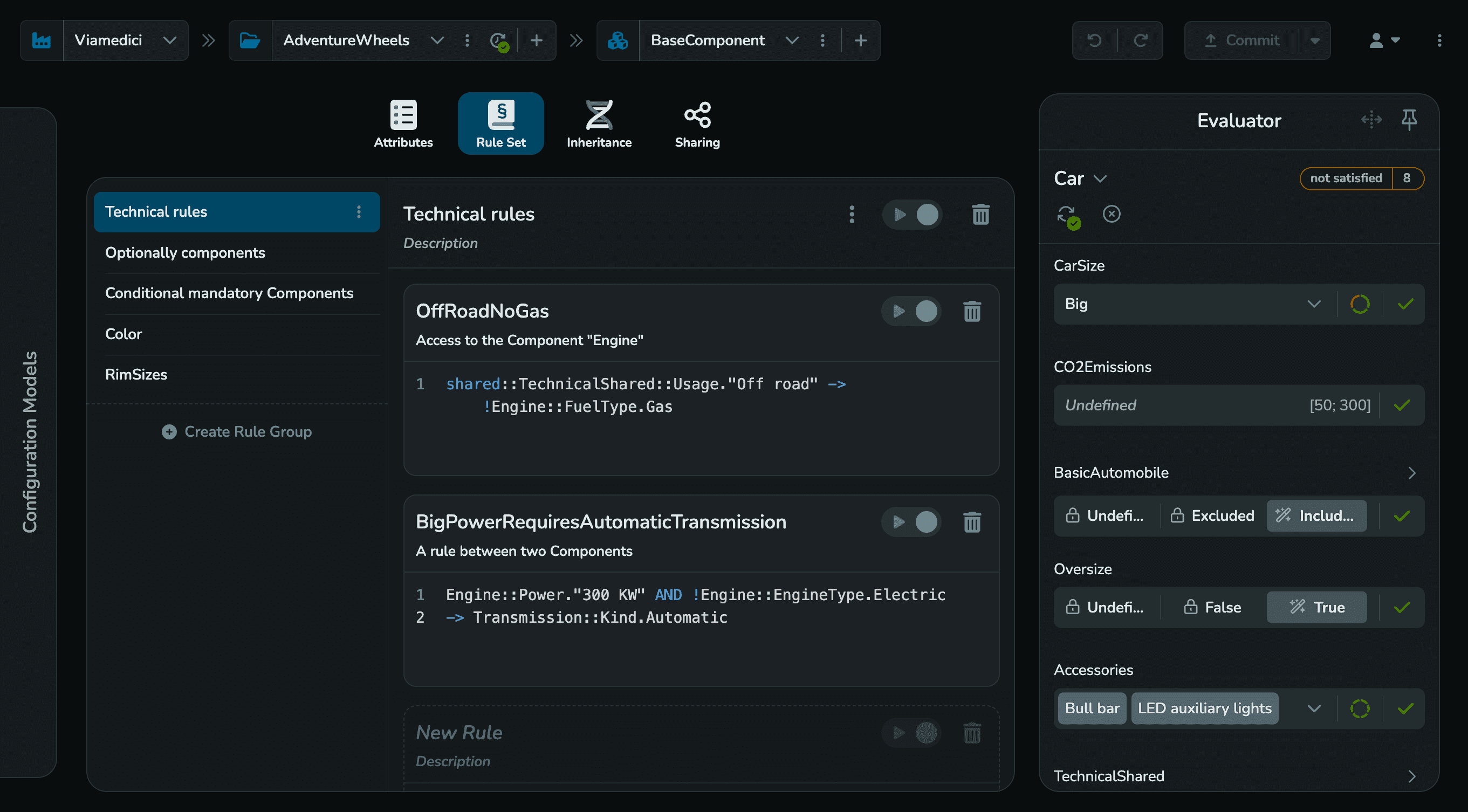
In the Configuration Model Developer (CMD), product managers and engineers build and maintain configuration models together. Even complex product logic stays clear and easy to manage over time.
Model rules instead of coding them
In the CMD you model product logic as rules, with no changes to application code. Complex relationships stay visible and easy to maintain.
From product data to configuration models
The CMD pulls configuration attributes from your existing systems and derives variant rules from your product hierarchies. Technical and sales rules are added and maintained right in the CMD.
Break down complexity, reuse knowledge
Like complex products, configuration models can be built from smaller components. Model a component once, then reuse and combine it in other models.
What customers say
We showed the configurator we built with Viamedici at a trade fair, and our competitor came to our stand twice to take a look. There is no better compliment.

Using Viamedici's libraries, we built our own product configurator, and it was a complete success. Everything runs smoothly and impressively fast. We could not be happier.
Viamedici built our configuration model in the Configuration Model Developer, quickly and efficiently. Our new Pocket Kit configurator is much faster than before and fits seamlessly into our website design.
Viamedici is our partner for product configuration and the product data behind it. The prototype the team built won us over straight away, and now we are turning it into a production system together.
Customer voices
From current projects

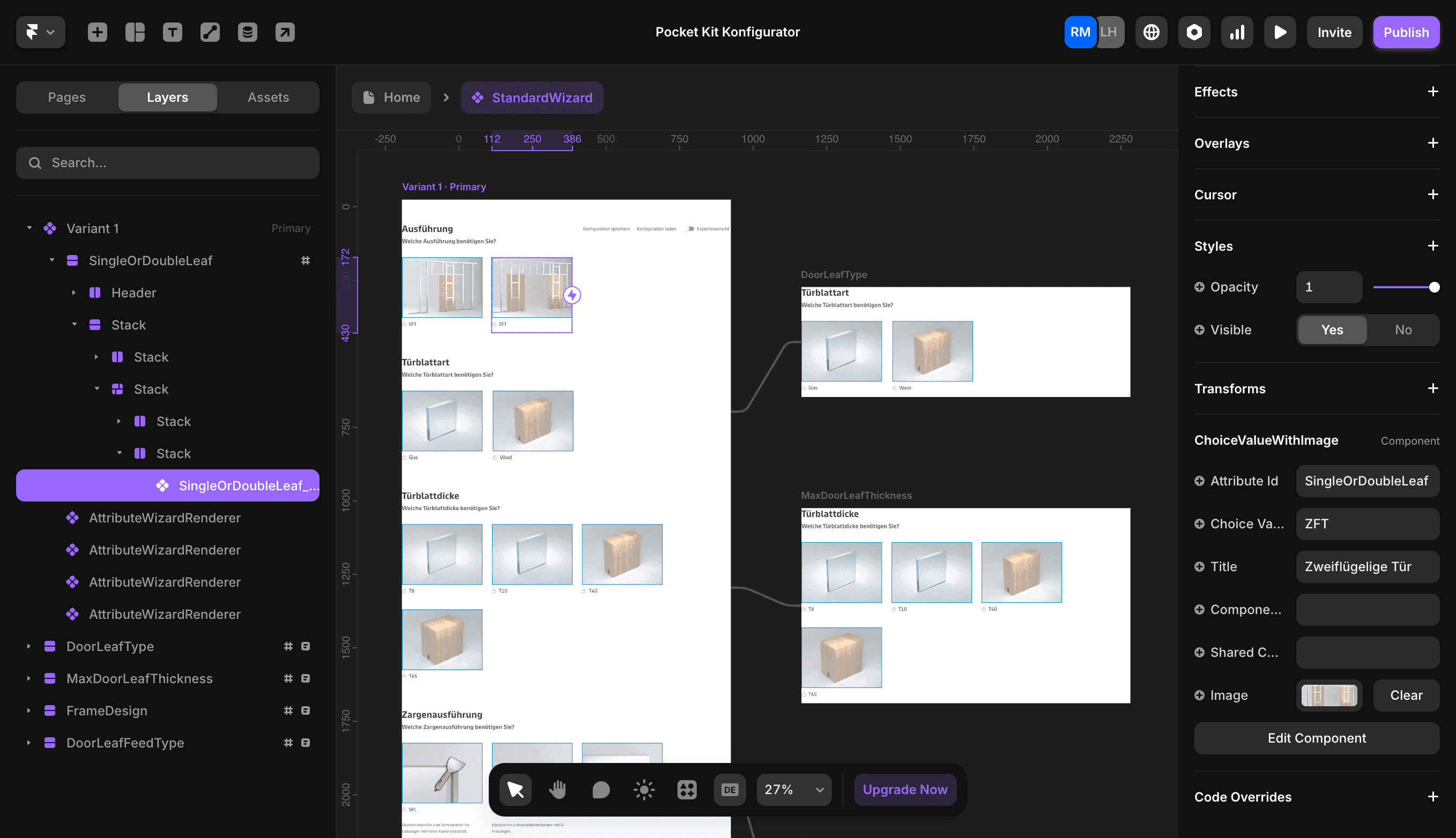
With the Viamedici Configurator UI Kit for Framer, you focus on design and user guidance. Ready-made components and controls speed up the build and cut development effort, with no traditional frontend coding.
Need more control, or configuration inside an existing application? Use the Configuration Engine's REST API directly, or our npm libraries for modern web apps.
REST API
The REST API brings the Configuration Engine into any application, on any platform and in any language. The OpenAPI specification describes the interface in a standard format, so API clients are easy to generate and integrate.
OpenAPI specificationTypeScript library
Our open-source TypeScript library wraps the Configuration Engine's REST API in a type-safe SDK for modern web apps. It manages running configurations, handles options that cannot be selected and stores the current configuration state.
GitHub repositoryReact library
Build your own configurator interface with our open-source React library and connect it to the Configuration Engine. Reusable components handle communication and configuration state; design and user guidance stay fully in your hands.
GitHub repositoryThe Configuration Engine combines rule-based product logic with a flexible headless architecture and fast response times: the technical foundation for any configuration solution.
Choices and consequences
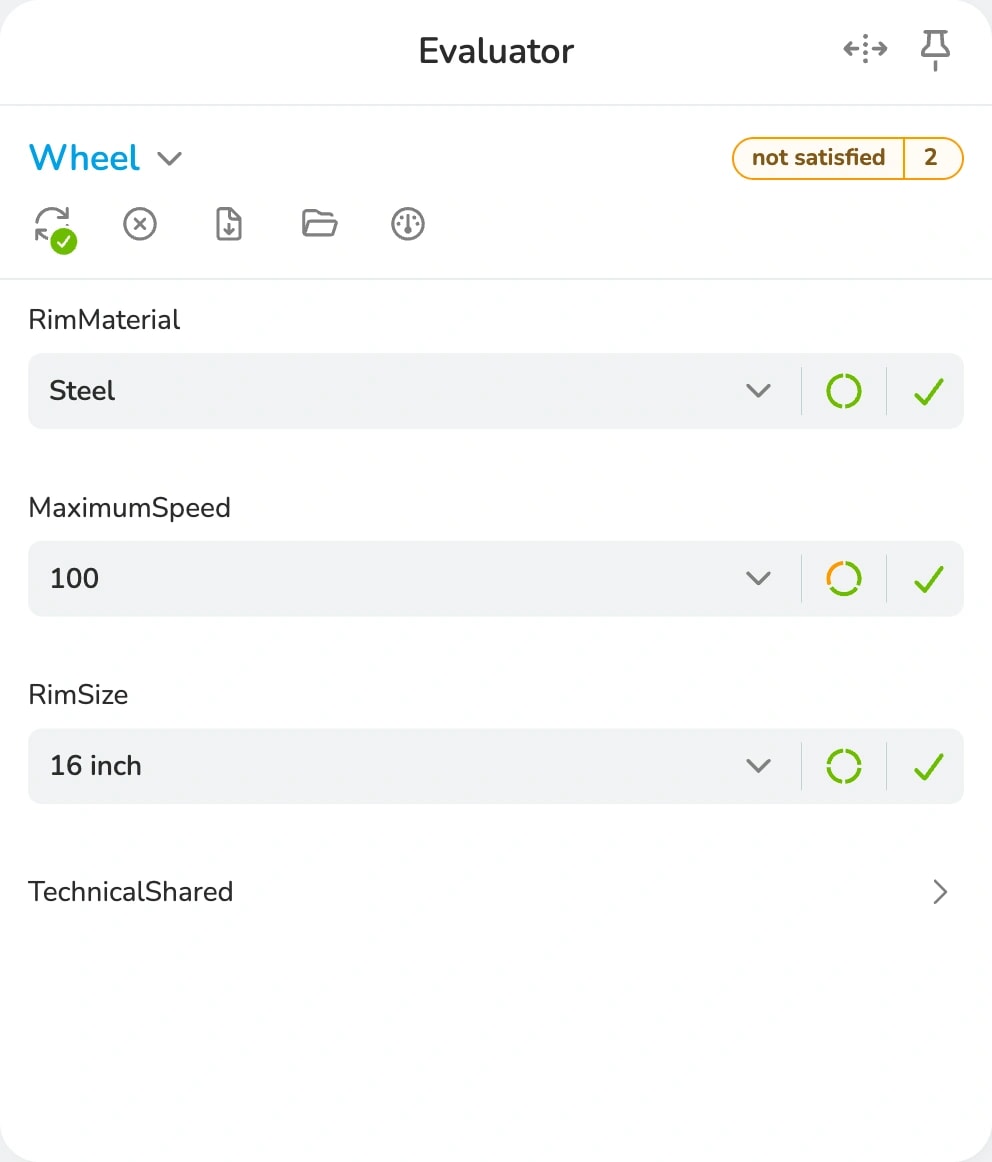
With every selection or input, the Configuration Engine evaluates your product rules. It works out which options stay available, which are blocked and which are set automatically.
Door Type
Door Leaf Material
Door Leaf Thickness
Frame Design

One model, many applications
One central configuration model for every channel: the Configuration Engine serves the same model to internal sales tools, customer portals and partner platforms. Every application shares the same logic and delivers consistent results.
Data-driven
Configuration attributes and product structures live in your connected PIM or ERP systems; technical and sales rules change in the CMD. The Configuration Engine picks up these changes without touching frontend or application code.

Cloud-native
Scalable, highly available and secure: built for modern cloud environments, SPC scales with demand and can run in a high-availability setup. Configuration rules are protected from unauthorised access.

Headless & API-first
Configuration logic without a fixed UI: the engine runs independently of the frontend. Integrate it into web, mobile or desktop apps through the REST API.



High performance
Fast evaluation, even on complex models: the Configuration Engine evaluates rules so quickly that user interfaces respond instantly.
Modular configuration models
Build configuration models from components. Link components to shared models and combine them into complete system configurations, with rules capturing the dependencies between them.
Efficient state handling
The Configuration Engine keeps the configuration state for the whole session, so applications only send what has changed. Less data, faster evaluation and a smoother experience.
SPC brings configuration into the applications and business systems you already use. Standard interfaces exchange product, customer and configuration data between them.
The engine fits into your existing interfaces without replacing the systems you already have.
Ready-made interfaces to EPIM and common CPQ, ERP and CRM systems cut integration time and keep product data consistent everywhere.
Open, documented REST APIs let your developers build custom connections beyond the standard interfaces.
Product data and rule updates reach connected systems in real time – no manual syncing, no duplicate data entry.

Web shops
Portals
EPIM
Sales systems
CPQ
CRM
ERP
SPC
4.9/5Customer satisfactionSatisfaction
+99%Data quality
+10yYears of experienceExperience
+80%faster configurationSpeed

SPC improves configuration in sales and engineering: fewer errors, less manual work and shorter sales cycles, from the first selection to the finished order.
- FasterFrom idea to approved variant.
Faster time to market
Launch new variants and options in days, not months. No waiting for the next IT release.
- More efficientThanks to automated, rule-based configuration.
Greater efficiency
Rule checks and automatic decisions cut manual work and get you to a complete product specification sooner. Automated workflows noticeably shorten your sales cycles.
Scalability and flexibility
Built on MACH architecture, so each service can be extended on its own and scaled with demand. Add new requirements, rules and variants at any time.
Fewer errors
Every selection is checked against the same rules, so invalid product specifications never get through. Invalid or incomplete specifications are caught while the configuration is still in progress.
Lower costs
Validated configurations mean fewer follow-up questions, corrections and rework, which lowers costs further down the line. Automatic rule checks cut the manual effort of checking and correcting.
Better customer experience
Clear guidance shows what is available, explains constraints and helps customers find the right configuration. Customers reach the right variant with less back-and-forth.